Summer 2024 • Personal Project • Gravel Build
Cervélo Áspero Gravel Build
Building my dream Cervelo Aspero
Platform
2023 Cervélo Áspero • 54cm • satin black carbon
Drivetrain
SRAM mullet: Rival AXS 42T 1x crank + GX Eagle 10–52T
Wheelset
Hunt 700c Gravel Race carbon • 17mm depth • 24mm internal width
Electronics
SRAM AXS wireless shifting
Use Case
Steep Bay Area climbs, fast gravel, long adventure days
Timeline
Summer 2024
Project Intent
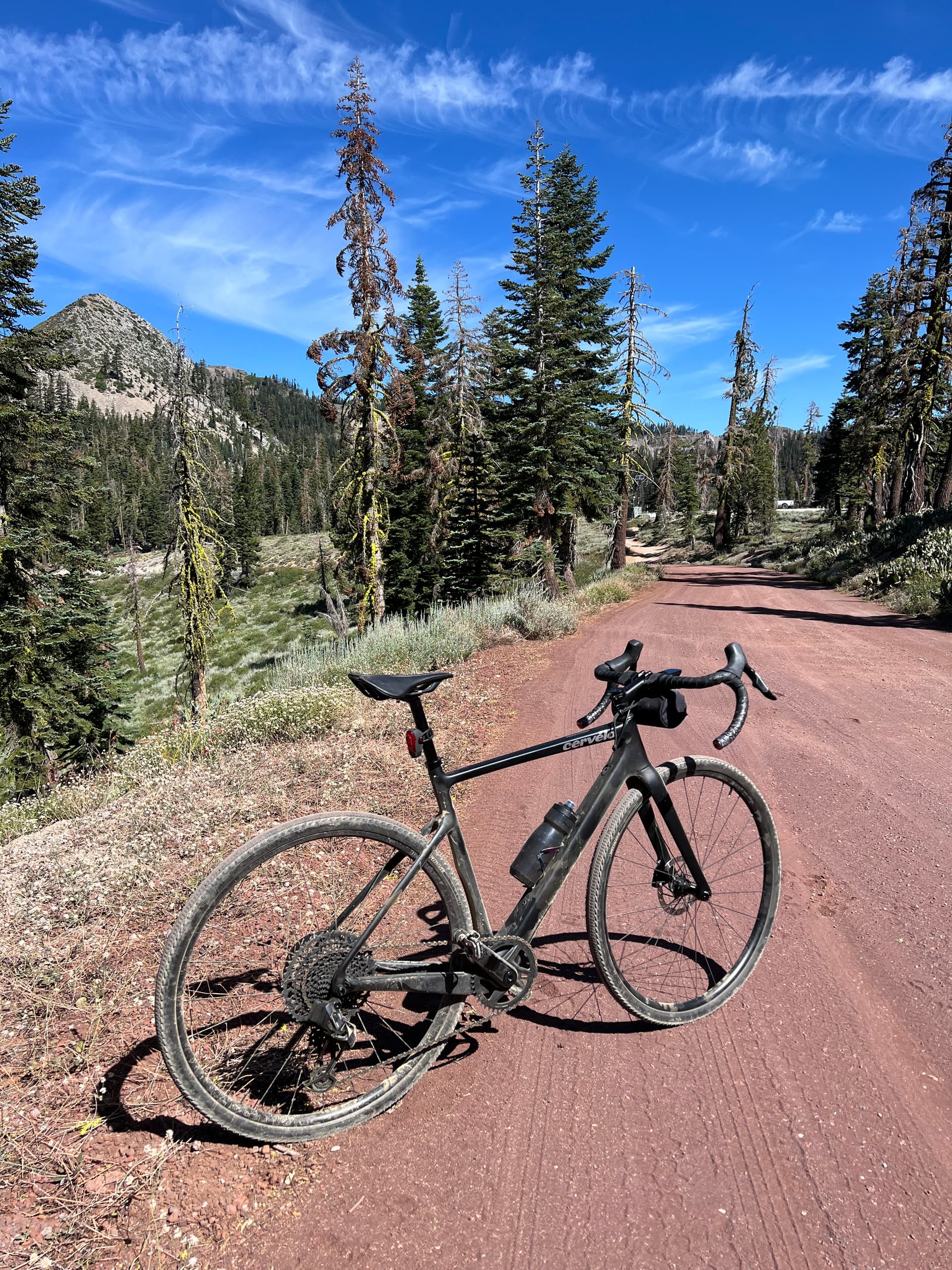
I already had a capable alloy gravel bike, my Canyon Grail AL, but I wanted something faster and more road-leaning for long mixed-surface days and big climbs. The Áspero’s geometry, clearance, and aero profile made it a good middle ground between a pure road race bike and a slack adventure rig. The goal was to build a bike that feels at home on steep San Francisco hills, alpine passes, and the random gravel detour I decide to take halfway through a ride.
As an engineer, I also wanted the build itself to be part of the fun. I had always wanted to build my own bike, even if that meant figuring out BB standards, internal routing, and AXS setup, instead of just buying a complete bike off the shelf.
- • Fast on tarmac, confident on gravel, and able to climb basically anything
- • Reliable, easy-to-service components with good parts availability
- • No obsession over gram-counting or perfect aero
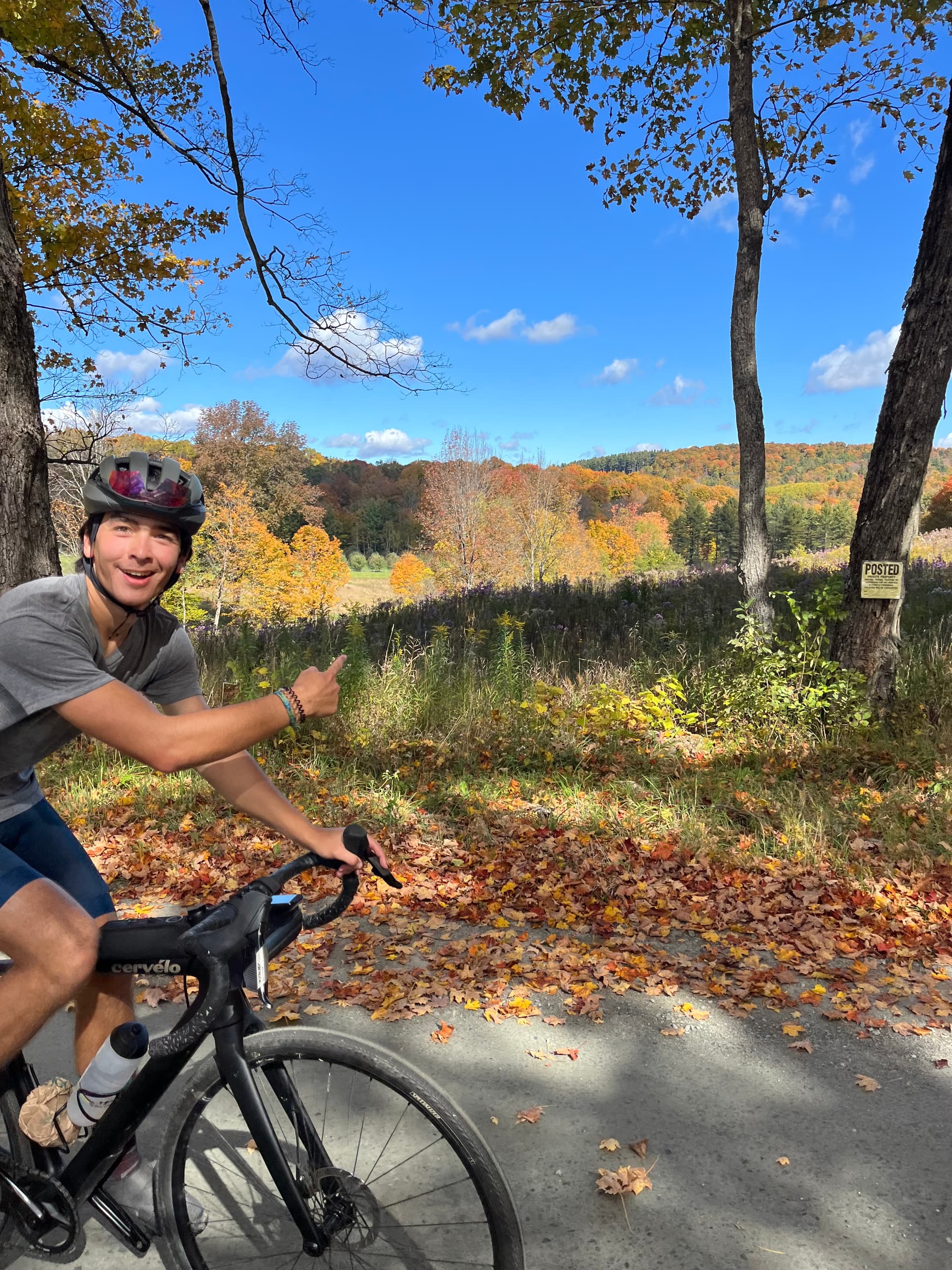
Example intended use case: Vermont gravel adventuring during peak foliage.
Design Decisions
FRAME • 1X MULLET • AXS • WHEELSWhy this frame
I’ve always dreamed of a bike like the Áspero - something with wider tire clearance, a fast frame, and a gorgeous geometry. I’d been eyeing bikes like the Crux, Stigmata, and Factor Ostro Gravel, but when a shop in Colorado put this Áspero frameset on sale, that basically locked in the direction of the build.
Why 1x & the mullet setup
Coming from a 2x Shimano setup, I wanted to simplify the cockpit and lean into the way I actually ride: lots of climbing, not a lot of time worrying about tiny cadence gaps on flat roads. A small 42T front ring and the massive 10–52T Eagle cassette give me plenty of low gear for SF walls and whatever alpine passes I want to tackle. I gave up some high speed gearing efficiency, but I’m not trying to win crit races with this bike.
Why AXS
Part curiosity, admittedly some laziness. AXS removes most of the cable-routing pain for shifting, and the setup process is extremely straightforward once the right derailleur is in hand. It also plays nicely with the mullet concept: road levers up front, mountain cassette and derailleur out back. Plus, I’d heard almost nothing but good things about SRAM’s AXS ecosystem.
Why these wheels
I knew I wanted carbon 700c wheels, tubeless-ready, with a responsive hub and a reasonable weight. Hunt’s Gravel Race wheelset was a sweet spot: light enough, wide enough, a good 40T ratchet, and actually in stock and on sale. The 700c choice keeps the bike feeling quick on pavement while still rolling smoothly over rough gravel with 38mm Pathfinders.
Build Specs
FRAME · GEARING · WHEELS · CONTACT POINTS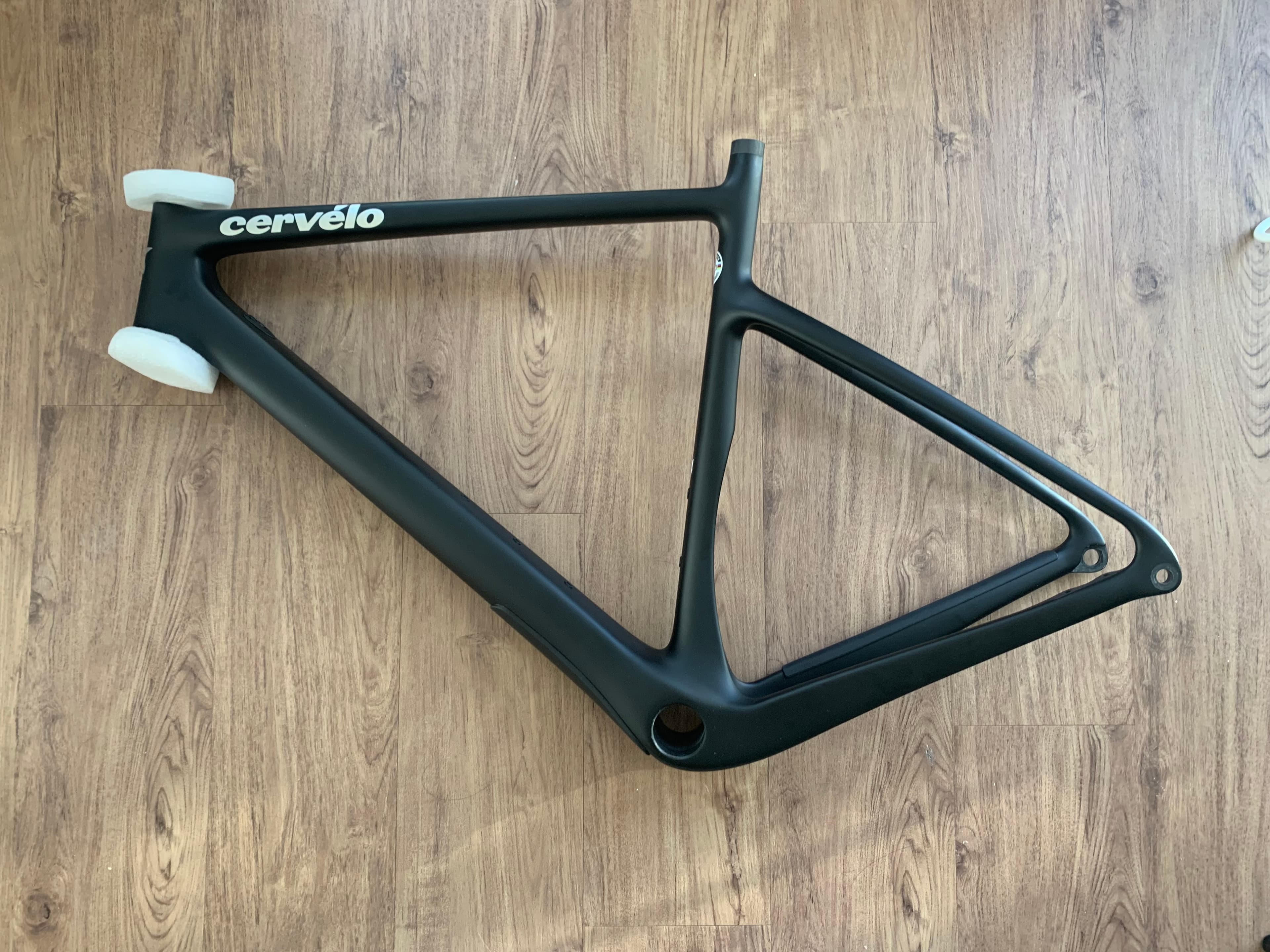
Frame & Contact Points
- • Cervélo Áspero 2023 carbon, size 54, satin black
- • BBright shell with DUB Pressfit Road Wide BB (79mm)
- • Cervélo carbon seatpost, Selle Italia saddle
- • Specialized 100mm / 7° stem, 2×10mm spacers
- • Easton EA70 AX bar, 42cm, 16° flare, Supacaz bar tape
- • Shimano PD-M520 pedals
Drivetrain & Brakes
- • SRAM Rival AXS 1x DUB Wide crankset (172.5mm)
- • SRAM GX Eagle XG-1275 10–52T cassette (XD driver)
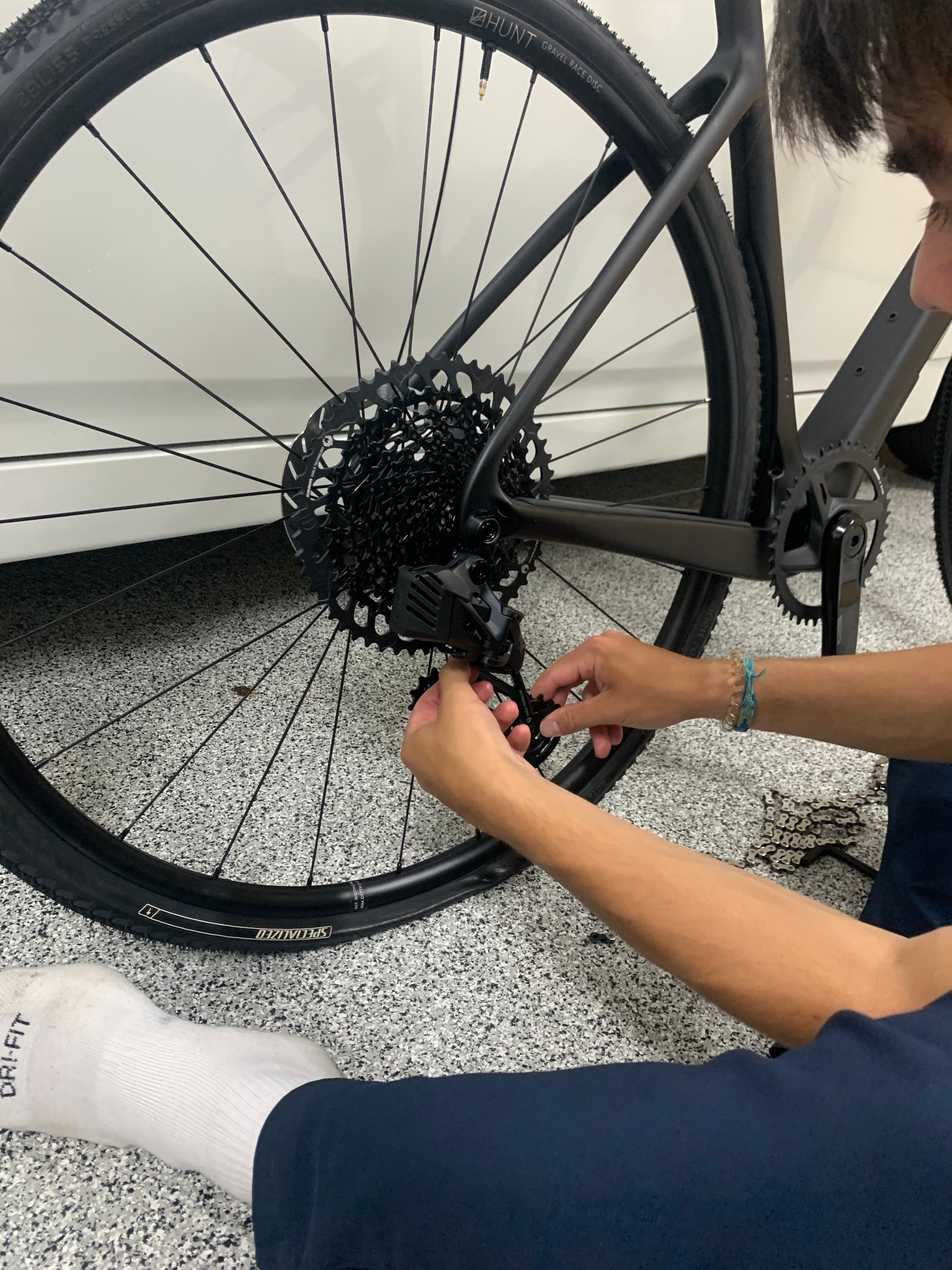
- • SRAM GX Eagle AXS rear derailleur (non-T-Type)
- • SRAM HS2 160mm centerlock rotors front + rear
- • SRAM Apex AXS levers + flat mount calipers
- • SRAM GX Eagle chain, sized via SRAM 12-speed guide
Wheels & Rubber
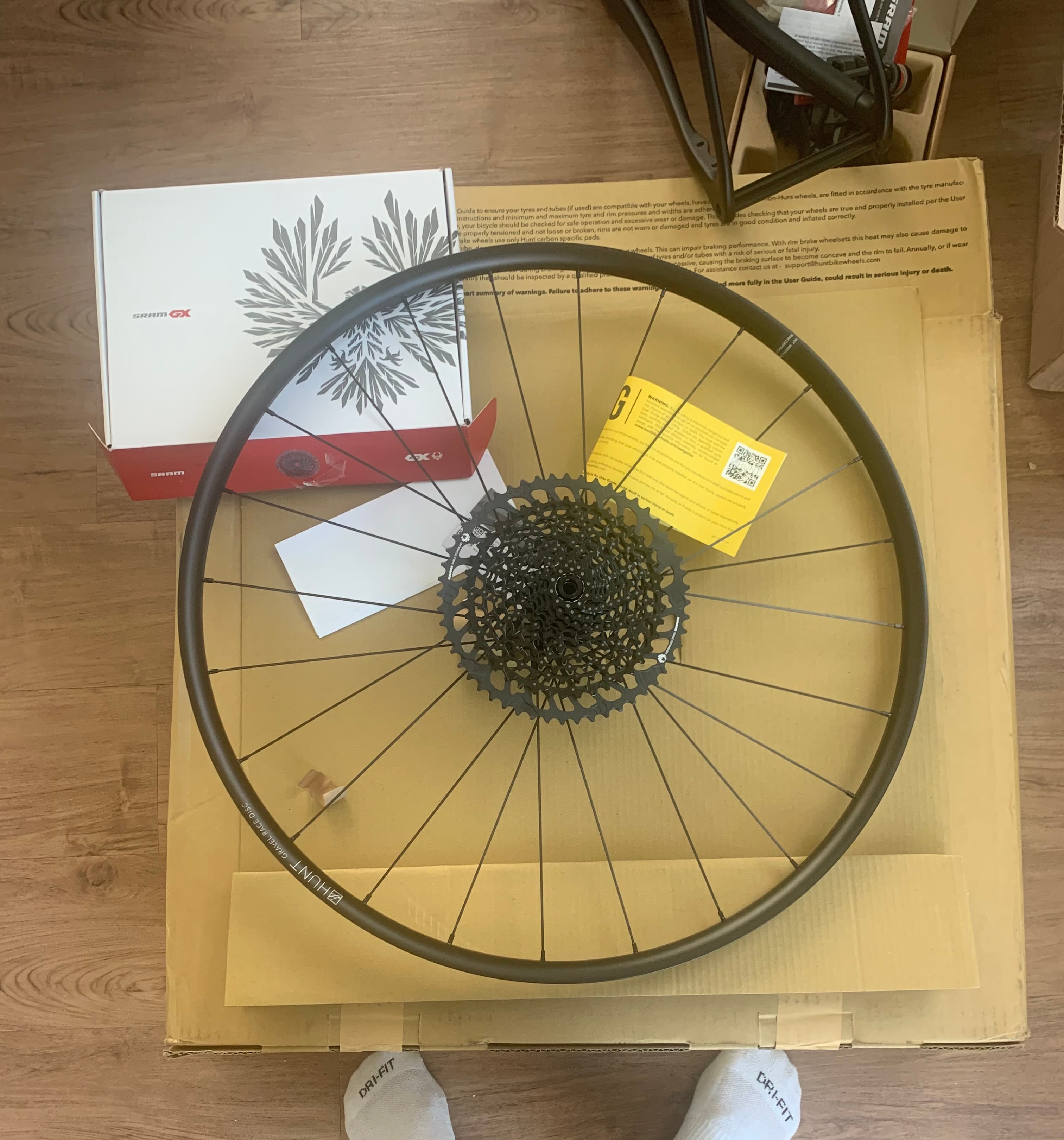
- • Hunt Gravel Race 700c carbon wheels (17mm deep / 24mm internal)
- • 40T ratchet rear hub, fast engagement + a nice buzz
- • Specialized Pathfinder Pro 38mm, black sidewalls
- • Tubeless with Orange Seal and taped Hunt rims
- • Thru-axle setup, centerlock rotor interface
- • Set up primarily for 700c speed and rolling efficiency
Assembly Process
BUILD LOG · MISTAKES · TOOL LEARNINGSFrame Prep & Bottom Bracket Difficulties
The build started with the Áspero frameset and an education in bottom bracket standards. BBright, DUB Wide, and Pressfit all collided here. I eventually landed on a DUB Pressfit Road Wide BBRight (79mm) and had a shop press it in—worth it to avoid buying a one-time-use tool and to make sure alignment was dead on.
Mullet Drivetrain & Derailleur Oops
I knew I wanted a 1x mullet setup: small front ring, massive 10–52T cassette out back for San Francisco’s punchy climbs. I accidentally ordered a T-Type GX Eagle derailleur first and only discovered that this 2023 Áspero frame wasn’t compatible with UDH once it showed up without a hanger in the box. After a small scavenger hunt (and a clutch assist from Tam Bikes in Mill Valley), I tracked down the non-T-Type GX Eagle AXS mech that would actually work.
Cockpit & Fit
The cockpit is a mix of well-priced, well-loved parts: an Easton EA70 AX bar and a Specialized stem, plus a few (new) headset spacers. I stacked everything, tested the position, marked the steerer, and then let a shop handle the actual cut, since I didn't want to purchase these tools either. Final fit landed on a slightly aggressive, fast-gravel position that still feels comfortable on long days.
Brake Routing & Bleeding
Routing the brake hoses internally and bleeding the SRAM system was easily the most time-consuming and frustrating part. I picked up a SRAM bleed kit and spent multiple rounds chasing tiny air bubbles to kill the spongy lever feel. DOT fluid ended up everywhere at least once, but the payoff was solid, consistent lever feel and the satisfaction of having done it myself.
Tubeless, Wheels & Sealant
The Hunt Gravel Race wheels went on with tubeless tape, valves, and pumped with Orange Seal. Seating the Specialized Pathfinder Pros was straightforward, and the 700c setup feels like the right choice for speed and rollover on mixed surfaces. The 40T ratchet hub engagement feels great for technical climbs.
First Rides!
I took my new baby on a bike trip out in the French and Italian Alps for a 5 day intro ride. The routes included a mix of gravel paths, fast roads and bike paths, and super long, sometimes punchy climbs. The bike handled everything beautifully and was pretty much everything I'd hoped for in this build.
Ride Impressions
- • On climbs, the 1x mullet setup feels exactly right. There’s always another gear, and I never find myself wishing for a smaller one.
- • The Áspero feels super snappy and responsive. Fast when I want it to be with great control, and has no difficulties when switching up the terrain.
- • The Hunt / Pathfinder combo is a great match: quick on tarmac, surprisingly composed on rough gravel, and easy to trust on long descents.
Lessons Learned
- • Bottom bracket and hanger standards are a minefield. Always read the frame docs first.
- • Bleeding your own brakes is annoying but also a cool process. For some things, it's neat to take time to learn the skill rather than outsourcing it.
- • 1x with a big cassette is absolutely the move for steep, exploratory riding, even if it’s not the most aero spreadsheet choice.
- • The build is half the fun; knowing every part makes the bike feel more like my own.
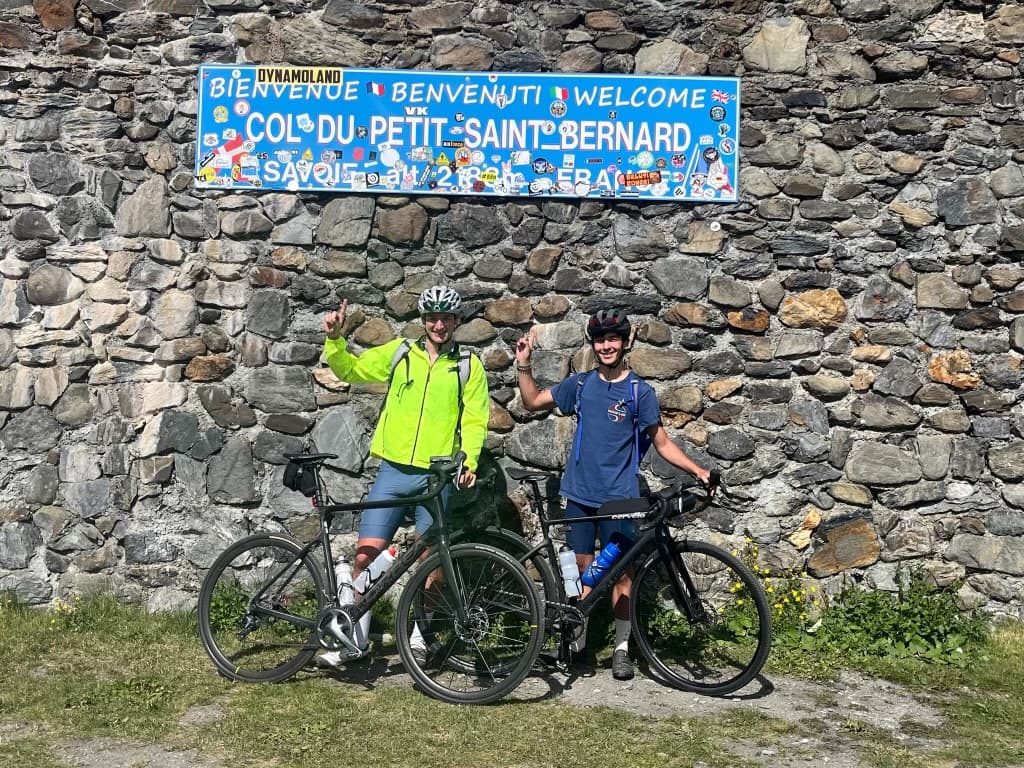
First big climb: Col du Petit St. Bernard in the French Alps, a lovely 16.5 mi (26.7km), 4612 ft (1406m), 5.3% average gradient ascent to the border of Italy.
Photo Gallery
BUILD • DETAILS • RIDES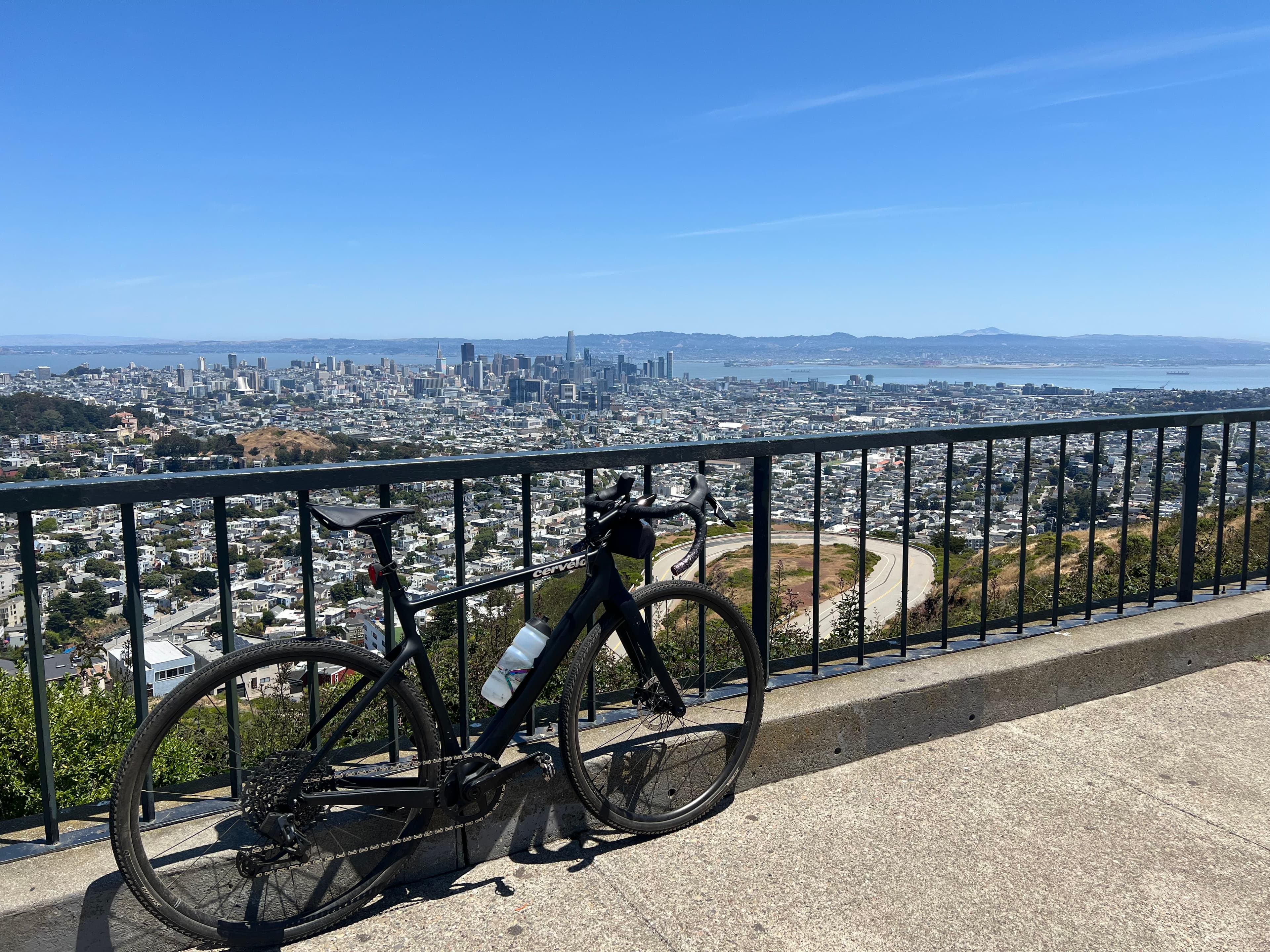
Twin Peaks, SF, CA